How to collect tax documents from clients securely
Collect tax documents from clients with one upload link each, a closing date and a folder per uploader.

If you want to know how to collect tax documents from clients securely, stop asking for attachments and give each client one upload link with written instructions. Files land in a folder for that client, a closing date ends the trickle, and you keep a record of who sent what. It suits a small practice or a freelance bookkeeper.
This article walks through the flow in the order you will build it: prepare, collect, return, and keep a record.
Why email attachments fail at tax time
Email was built for messages, not for collecting a hundred sets of documents. Every season the same problems show up:
A client sends three of the five documents you need, and you only notice a week later.
Scans are huge, and the message bounces or the attachment never arrives.
Files arrive as
scan0042.pdfandIMG_8812.jpg, so you rename them by hand.Documents sit across your inbox, a colleague's inbox and a download folder, with no record of who sent what and when.
Email also gives you no place to put instructions that the client will actually read before sending. The fix is to move the collection step out of the inbox and into a page built for uploads. If you want the background on why sharing files and storing them are different jobs, read file sharing vs cloud storage.
Do not ask clients to put identity numbers or account numbers in the subject line or body of an email. Ask for the document itself through the upload link instead.
Prepare: write an intake checklist for each client
Before you create any link, list what each client normally sends. A salaried employee, a sole trader with a few clients, and a small company each have a different list. Keep one short checklist per client type, then copy and adjust it per client.
A typical checklist names the document, the period it covers and who produces it. For example: income statements from employers, bank and card statements for the year, invoices you issued, receipts for expenses, last year's return, and anything that changed since last year such as a new address, a new business or a sold asset. What goes on your list depends on your clients and your country, so build it from your own engagement process and your own advisers' guidance, not from a template you found online.
Last year's list is the best start. Copy it, remove what no longer applies, and add what the client told you changed.
Number the items on the checklist. Clients can then reply "I'm missing number 4" instead of writing a paragraph, and you can see at a glance what is outstanding.
How to collect tax documents from clients securely with one link each
This is the heart of the flow. A file request is a page you share by link. The client opens the link, reads your instructions and drops files onto the page. On a public request, the client needs no account to send. Free includes file requests and custom branding.

Create one file request per client. Give it the client's name as the title, and put your checklist in the description. Then send the link yourself, or use Send by email to email up to 100 addresses at once. Each email carries the link, your description and the deadline date. This is what file requests are for.
One honest limit: on a public request, anyone who has the link can send files to it, so send each link only to its client and do not post it anywhere public.
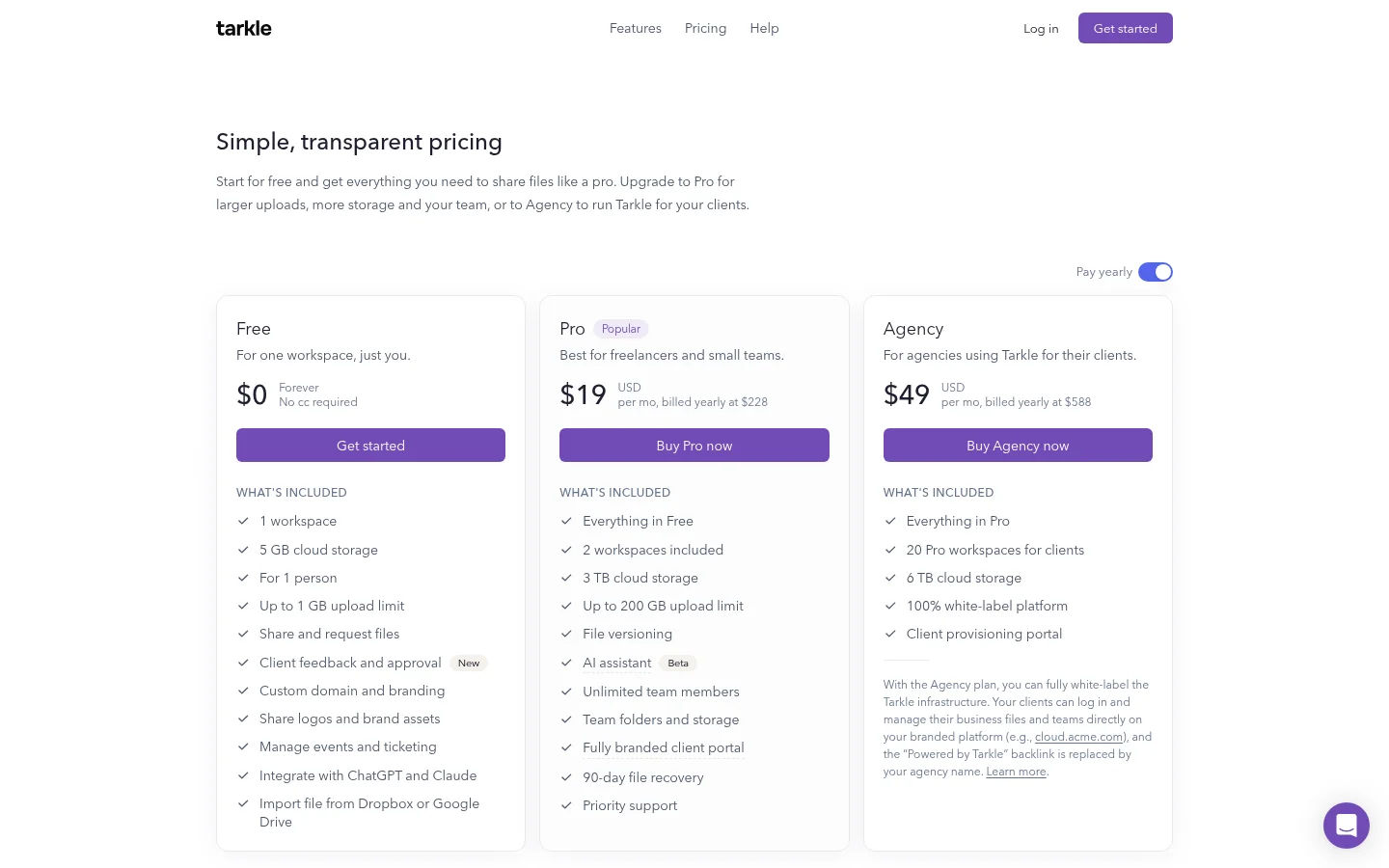
On Free, one request can be active at a time. Free also accepts 50 submissions a month. On Pro there is no cap on either count.
Each uploader's files go into their own subfolder.
Write the instructions in the order of your checklist, and end them with a sentence such as "Upload everything you have by the closing date, even if something is missing, and tell me what you could not find."
Put your firm's name on the upload page
Clients are cautious about uploading financial documents to a page they do not recognise. Custom branding is included on Free. The request email carries your firm's name and logo.
See custom branding for more.
Set a closing date and a size limit
Without a closing date, documents trickle in until you start work and then keep arriving. Pick a date, tell clients in the instructions, and let the request enforce it.
The deadline field takes a calendar date from tomorrow up to three years ahead. After the date, the link stops accepting new uploads. An upload that started before the date can still finish, so choose a date a few days before your own cutoff.
You can also set an upload limit on each request. It is the most a visitor can upload at once on that request, so one oversized batch of scans does not arrive in a single go.
Set two dates. Tell the client the first one, which is your real closing date. Keep the second, a few days later, for yourself, so a late client does not mean a missed filing.
Let every client's files arrive sorted
The second reason intake takes so long is sorting. Each request uploads into a folder you choose. Inside it, Tarkle makes a subfolder for each uploader, keyed by their email, so a client who uploads again with the same email lands in the same subfolder.
So a tidy structure is a folder for the tax year, with one request per client inside it. Choose that folder when you create each request.
Agree a file naming pattern in your instructions, such as client name, document type and year. Clients will not all follow it, but it should cut the renaming you do by hand.
Send finished documents back with a password and an expiry date
Collecting is half the job. The finished return, a summary letter or a signed engagement document also travels by link, so do not send it as a plain attachment.
Create a transfer, then turn on password protection and set an expiry date. Password protection requires a password before anyone can open a transfer. An expiry date sets the day after which the link stops working. Send the password by a different channel than the link, for example a text message or a call.
Make the expiry date long enough for the client to act, but not much longer. A week to ten days is plenty for most deliveries, and you can always send a new link.
Remind clients without chasing
Set the reminders in your calendar before you send the first link. A simple routine is enough:
Day 1: send the link by email with the closing date in the first line.
One week later: check which clients have uploaded, and send a short reminder to those who have not.
Three days before closing: a second, shorter reminder, plus one line saying what happens after the date.
Closing day: close the requests and send each client a note listing what is still missing.
To see who has uploaded, check the request's folder, where each uploader has a subfolder of their own. By default you also get an email when files arrive, and the uploader also gets a confirmation that the files were submitted.
Keep a record of who uploaded and when
When a client says "I sent that in March", you want an answer that is not your memory. Each uploader's files sit in their own subfolder inside the request's folder, and the activity log keeps a searchable record of what happens in your workspace. You can export the log as a CSV file with the date, action, resource, user and type of each entry.
Use it alongside your own engagement records, not in place of them. How long you keep client documents is a question for your own advisers and local rules.
Where a practice-management suite fits better
This flow solves intake: collecting documents and returning finished ones. Tarkle covers the files: file requests for documents coming in and file sharing for documents going back out. Bigger firms with deep compliance needs may prefer a dedicated practice-management suite, and that is a sensible choice for them. For a small practice or a freelance bookkeeper who mostly needs documents to arrive in order, a file request per client is often enough.
Set up your first client request
Write one checklist per client type and copy it per client.
Create a tax-year folder, then one request per client with the checklist in the description and a closing date.
Send each link by email, put the reminder dates in your calendar, and check the request folders as uploads arrive.
Return finished documents as password-protected transfers with an expiry date.
More than one active request at a time needs Pro. Start for free, or see what else is available under features.
What to remember about Tarkle
Each client gets one file request, with a deadline, and each uploader gets a folder inside it. Free includes file requests with one active request and 50 submissions a month. Pro has no cap on either. Test the routine with real documents first: Start for free, or compare plans and pricing.